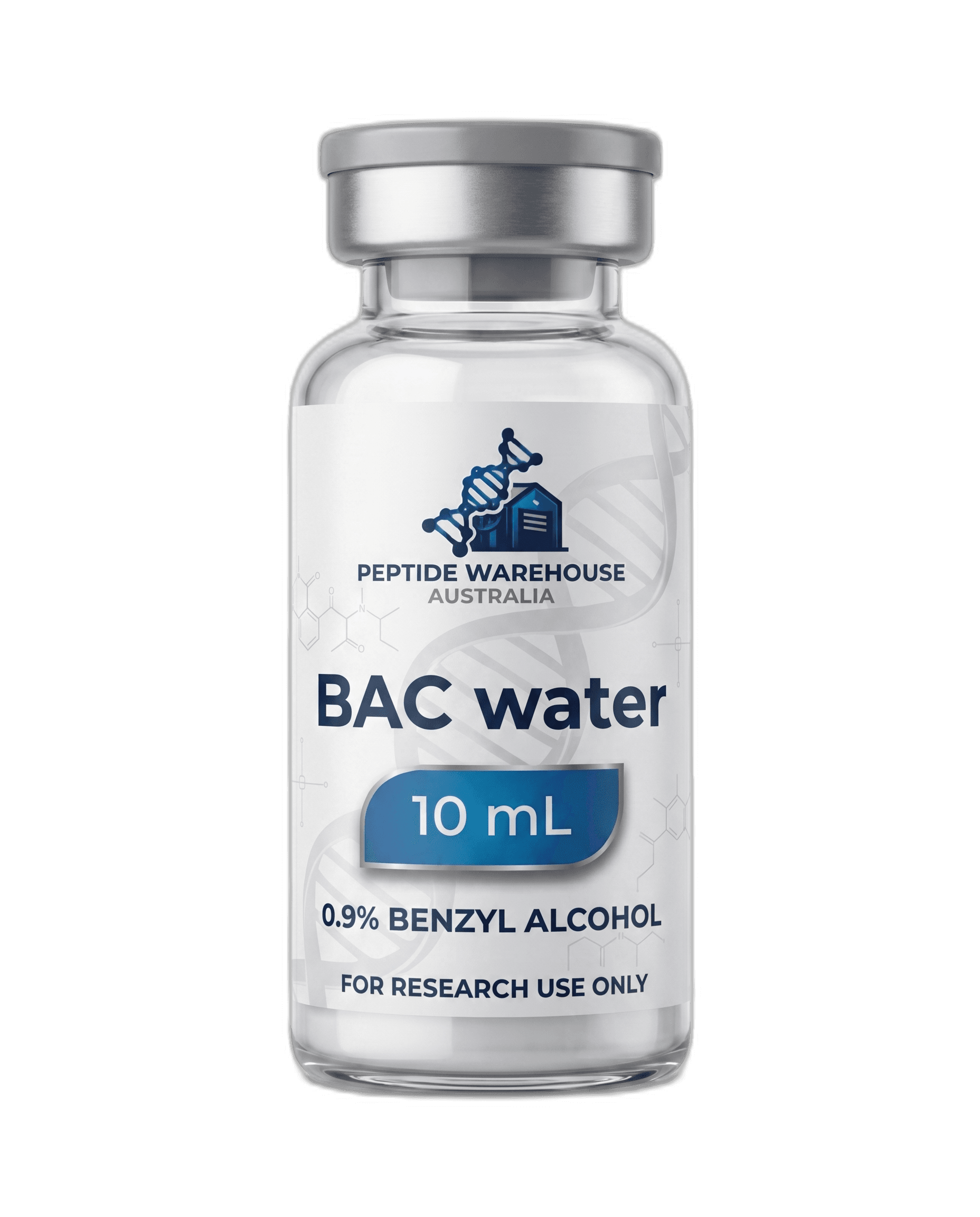
BAC Water
10mLLab Supplies
Pharmaceutical-grade bacteriostatic water 10mL for peptide reconstitution. Contains 0.9% benzyl alcohol preservative. Essential for lyophilised peptide research protocols.
$17.99AUD
Free shipping over $199
Out of Stock
Limited stock — only 4 remaining
Stock is running low. Order now to avoid missing out.
✓Free shipping on orders over $199 AUD
✓Australia Post tracked — Standard $8.99 / Express $13.99
✓Same-day dispatch on orders placed before 12PM AEST (next business day after)
BPC-157 is available in Australia from Peptide Warehouse Australia with fast domestic shipping to all states and territories.
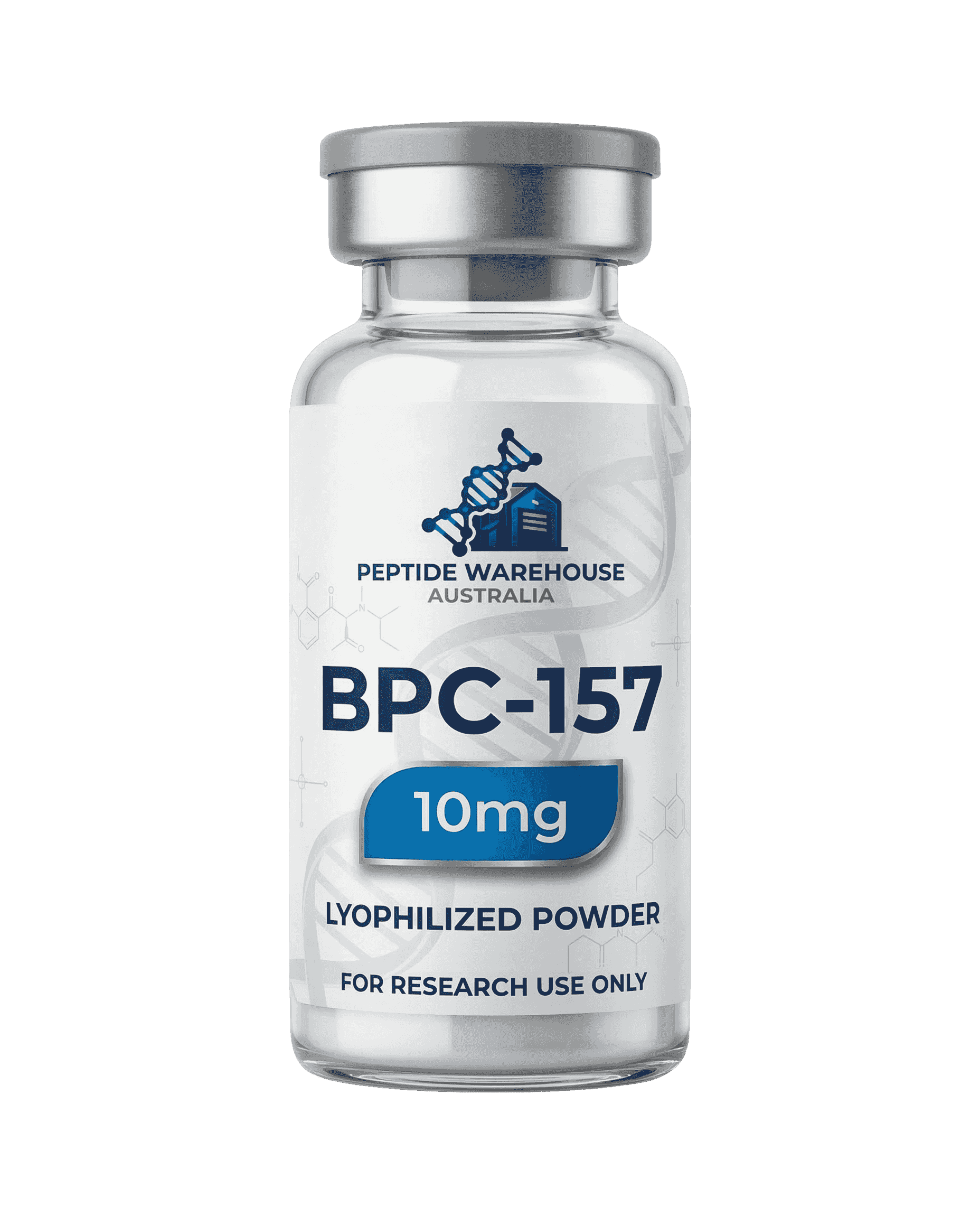
BPC-157 (Body Protection Compound-157, CAS 137525-51-0) is a synthetic pentadecapeptide of 15 amino acids derived from a partial sequence of the gastric protein BPC. It is one of the most extensively researched tissue-repair peptides available today, originally isolated from human gastric juice. It has been studied in soft tissue injury models, gut mucosal models, and inflammatory pathway models across a range of preclinical settings — the published literature spans 200+ peer-reviewed studies on PubMed.
⚠ For in-vitro laboratory research use only. Not approved for human or veterinary use. Not drugs, food supplements, or cosmetics. Not evaluated or approved by the TGA. You must be 18 years of age or older to purchase. By placing this order, you confirm you are a qualified researcher and will use this compound strictly in accordance with all applicable Australian laws and regulations.
BPC-157 (Body Protective Compound 157) is a synthetic pentadecapeptide derived from a sequence found in gastric juice. In research models it is studied for interactions with angiogenic signalling (including the VEGF pathway), nitric-oxide systems and growth-factor activity that are associated with tissue-repair processes.
| Purity | 99.815% (HPLC) |
|---|---|
| Compound Class | Synthetic pentadecapeptide |
| CAS Number | 137525-51-0 |
| Molecular Weight | 1419.53 Da |
| Molecular Formula | C₆₂H₉₈N₁₆O₂₂ |
| Amino Acid Sequence | Gly-Glu-Pro-Pro-Pro-Gly-Lys-Pro-Ala-Asp-Asp-Ala-Gly-Leu-Val |
| Testing | HPLC purity + mass spectrometry identity, COA verified |
| Storage | Lyophilised: −20°C · Reconstituted: 2–8°C, use within 28 days |
| Research Use | In-vitro laboratory research use only |
BPC-157 is a synthetic pentadecapeptide consisting of 15 amino acids (sequence: Gly-Glu-Pro-Pro-Pro-Gly-Lys-Pro-Ala-Asp-Asp-Ala-Gly-Leu-Val), derived from a protective protein found in gastric juice. In preclinical research, BPC-157 has been studied for its effects on tissue repair and angiogenesis, gastrointestinal tract function and gut-brain signalling, tendon-to-bone healing models, and anti-inflammatory pathway modulation. It is one of the most extensively researched tissue-repair peptides with a large body of published rodent studies. Molecular weight: 1419.53 Da. Supplied at 99.815% HPLC purity.
BPC-157 and TB-500 are structurally unrelated peptides that have been studied in overlapping but distinct tissue repair contexts. BPC-157 acts via pathways involving nitric oxide, VEGFR2, and the FAK-paxillin pathway. TB-500 is thought to work primarily through actin binding and cell migration promotion. Because their proposed mechanisms differ, combining them in research has become common practice — which is why we offer a pre-blended BPC-157 + TB-500 Blend (5mg each, 10mg total) for researchers requiring both in a single preparation.
Reconstitution: Using a clean 31G insulin syringe, draw 1–2mL of bacteriostatic water. Inject slowly down the inside glass wall of the BPC-157 vial. Gently swirl until fully dissolved — do not shake, vortex, or invert aggressively. The solution should be clear and colourless. Common concentration: 1mL bacteriostatic water into 10mg = 10mg/mL; 2mL = 5mg/mL. Storage: Lyophilised — store at −20°C for up to 24 months. Reconstituted — refrigerate at 2–8°C and use within 4 weeks. Protect from light throughout.
Legal status: BPC-157 is legal to purchase in Australia for laboratory research purposes. It is not listed as a scheduled substance under the Poisons Standard when sold for research use only. Purchasers must be 18+ and confirm research-only use. It is not TGA-approved for human consumption, therapeutic, cosmetic, or veterinary use. Quality: Our BPC-157 10mg (Batch PW-260308) is independently verified at 99.2% HPLC purity. COA includes HPLC purity %, mass spectrometry identity confirmation (MW 1419.53 Da, C62H98N16O22), and sterility screening. Full COA is publicly available in our COA Library.
Peptide Warehouse Australia ships BPC-157 nationwide via Australia Post with tracking. Orders placed before 12PM AEST dispatch the same business day; orders after 12PM AEST dispatch the next business day. BPC-157 is currently on pre-order with dispatch within 7–10 business days from our Melbourne warehouse. Shipping: Standard Post $8.99 (2–6 days); Express Post $13.99 (1–3 days); free shipping on orders over $199 AUD. We also offer the BPC-157 + TB-500 Blend for researchers requiring both compounds, and individual BAC Water and insulin needles in our Supplies category.
BPC-157 and GHRP-6 are structurally and mechanistically unrelated. GHRP-6 (Growth Hormone Releasing Peptide-6) is a hexapeptide ghrelin mimetic that stimulates GH secretion via the GHS-R1a receptor — its primary research applications involve the GH/IGF-1 axis. BPC-157 does not act on GHS-R1a and does not directly stimulate growth hormone release. Instead, BPC-157's research profile centres on local tissue repair, angiogenesis, and gut protective mechanisms. The two peptides target completely different receptor systems and are not interchangeable research tools. Not for human consumption — for research use only.
TB-500 (thymosin beta-4 fragment, sequence Ac-LKKTETQ) primarily acts by sequestering actin monomers (G-actin), promoting cell migration and tissue remodelling at a cytoskeletal level. It is also studied for its effects on systemic inflammation and cardiac tissue models. BPC-157, by contrast, is more focused on local angiogenesis, nitric oxide modulation, and gastrointestinal protective mechanisms. TB-500 has broader systemic distribution properties in animal models, while BPC-157 is more frequently studied in localised tendon, ligament, and gut tissue contexts. For research requiring both mechanisms, our BPC-157 + TB-500 Blend at /products/bpc-157-tb-500-blend provides both at 5mg each in a single vial. Not for human consumption — for research use only.
BPC-157 is a stable gastric pentadecapeptide, and a notable feature of the research literature is that it has been studied via both systemic and oral routes in animal models — its reported stability in gastric juice is part of why oral-route research exists. The route used is determined entirely by the experimental protocol. Not for human consumption — for research use only.
Preclinical research has examined BPC-157 in the context of angiogenesis and growth-factor signalling, including VEGF-related pathways and the formation of new blood vessels in tissue-repair models. This vascular angle is one proposed mechanism behind its studied effects in tissue-repair models across multiple tissue types. Not for human consumption — for research use only.
BPC-157 appears in preclinical literature across tendon, ligament, muscle, bone and gastrointestinal tissue models, as well as nervous-system studies. The breadth of tissue models is a defining feature of the compound's research profile. All findings are from research settings and do not constitute evidence of human benefit. Not for human consumption — for research use only.
Beyond tissue repair, BPC-157 has been investigated in preclinical models touching the gut-brain axis and neuroprotection, including studies on neurotransmitter systems and nerve injury. These are exploratory research directions in the literature rather than established mechanisms. Not for human consumption — for research use only.
Lyophilised BPC-157 stores well at −20°C for up to 24 months. After reconstitution in bacteriostatic water, refrigerate at 2–8°C and use within about 4 weeks, protected from light and away from repeated freeze-thaw cycles. Its relative stability is one reason it is a widely used research peptide. Not for human consumption — for research use only.
BPC-157 stands for Body Protective Compound 157. It is a pentadecapeptide (a 15-amino-acid chain) and is sometimes written BPC157 or, by autocorrect, PBC-157. All of these refer to the same tissue-repair research peptide. For in-vitro research use only.
Researchers typically pair BPC-157 with these reconstitution essentials.
Pharmaceutical-grade bacteriostatic water 10mL for peptide reconstitution. Contains 0.9% benzyl alcohol preservative. Essential for lyophilised peptide research protocols.
Free shipping over $199

Sterile 31G insulin needles for research use — individually wrapped, single-use. Choose from 10, 20, 50 or 100 pack.
Free shipping over $199
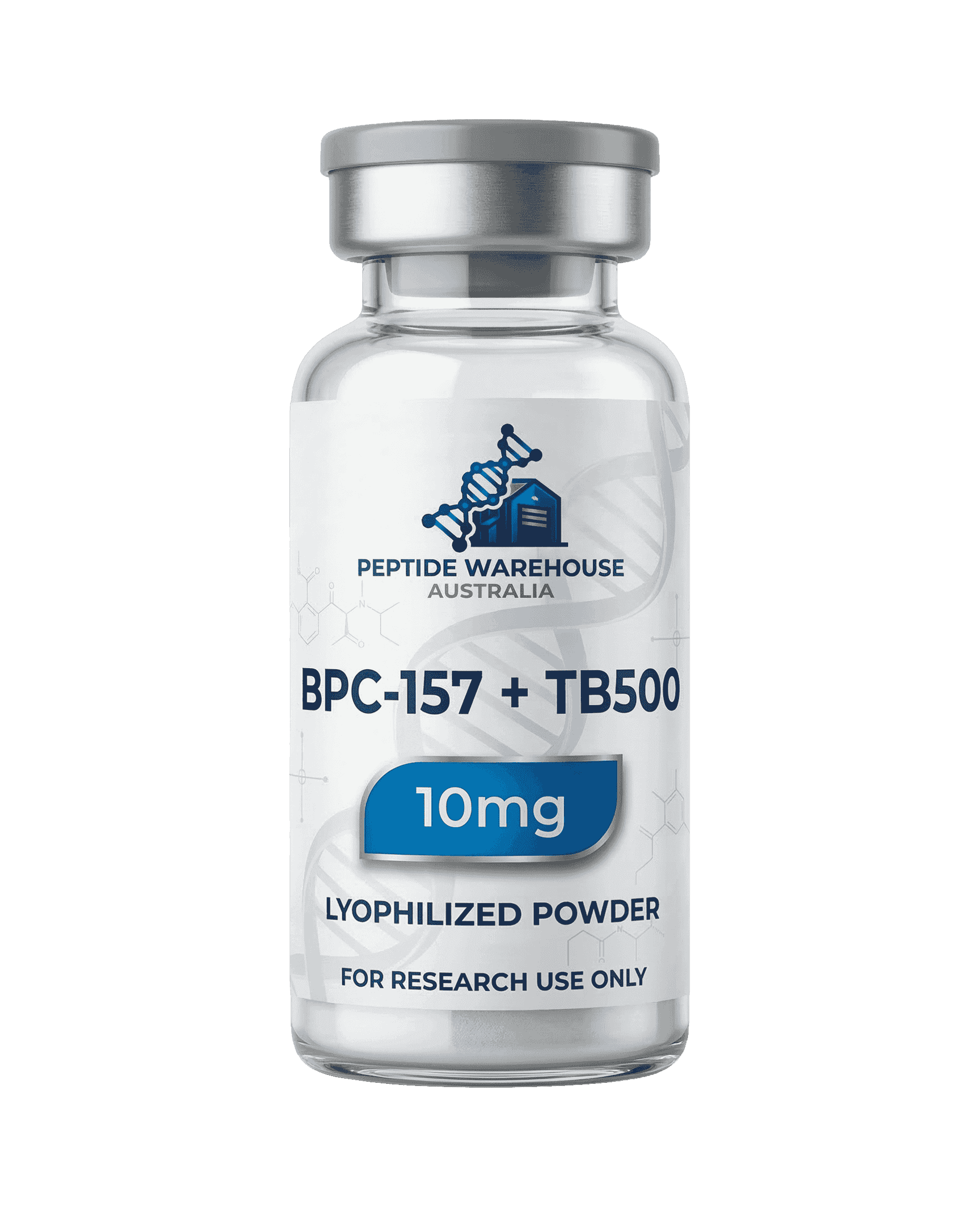
Research-grade BPC-157 + TB-500 synergistic healing blend 10mg lyophilised powder. 99.0% HPLC purity, COA verified. Combined tissue repair and anti-inflammatory research formula.
Free shipping over $199
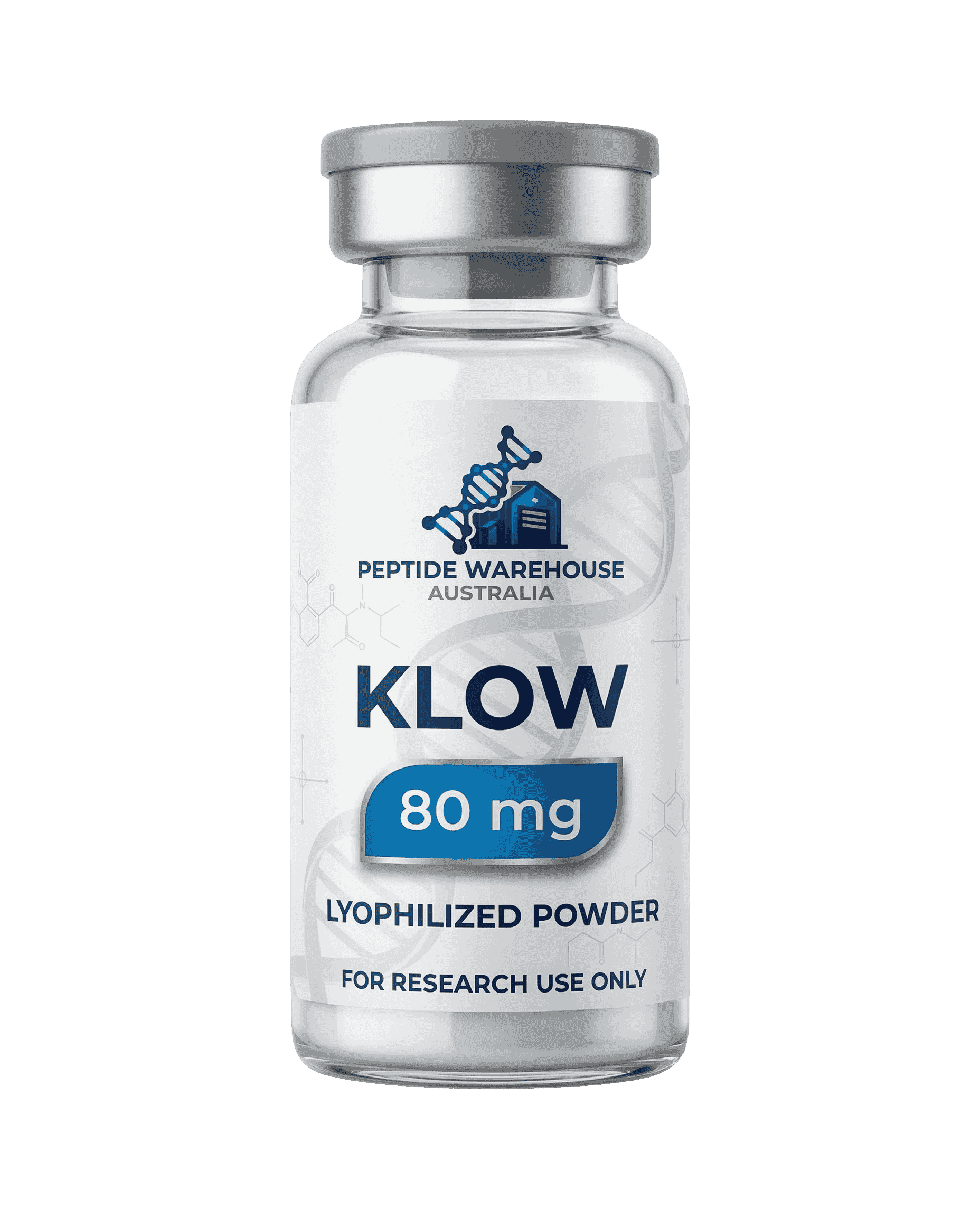
KLOW multi-peptide blend 80mg lyophilised powder. 99.0% HPLC purity, COA available online. Advanced synergistic peptide research formula.
Free shipping over $199
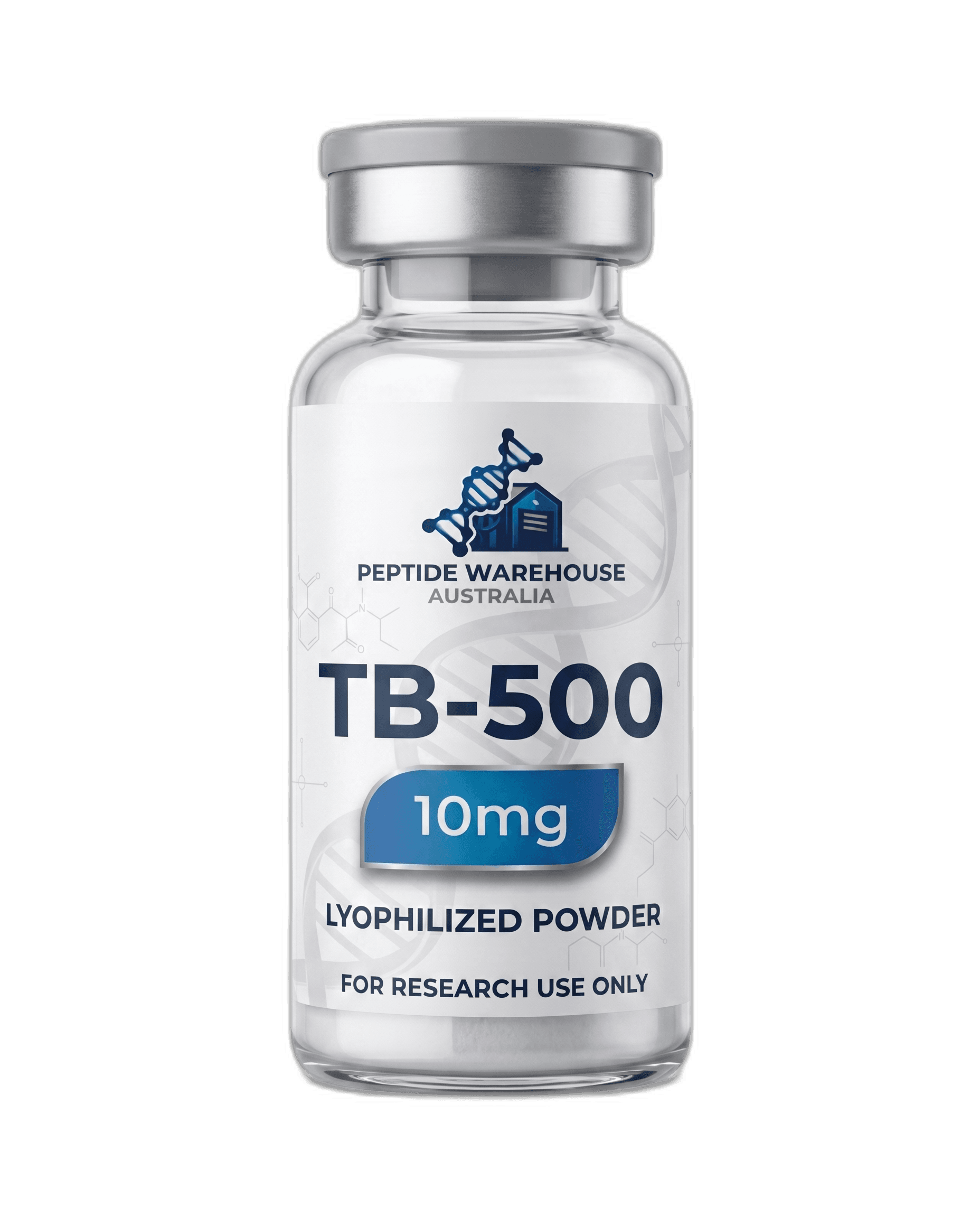
Research-grade TB-500 10mg lyophilised powder — 99.1% HPLC purity, COA verified. Thymosin beta-4 fragment studied for accelerated muscle, tendon, and ligament repair, angiogenesis, and anti-inflammatory activity in preclinical models.
Free shipping over $199

ARA-290 (Cibinetide) — non-erythropoietic EPO-derived peptide studied in tissue-protection and neuropathy research. ≥99% HPLC purity, COA verified.
Free shipping over $199
BPC-157 Research Overview: What the Science Shows
A comprehensive review of preclinical BPC-157 research including its studied mechanisms, molecular structure, and key findings from published literature.
Research deep-dive →How to Reconstitute Peptides: A Step-by-Step Guide
Learn the correct technique for reconstituting lyophilised research peptides using bacteriostatic water for accurate, contamination-free preparations.
Step-by-step guide →Peptide Storage Guide: How to Maximise Stability
Proper storage is critical to maintaining peptide integrity. Learn the correct temperature requirements and handling practices for lyophilised and reconstituted peptides.
Read full article →Part of our
Tissue Repair Research research collection →Or use our Peptide Calculator to work out reconstitution and syringe units for this compound.
Pricing, stock, and COA last verified June 2026
Your cart is empty
Add some research peptides to get started.