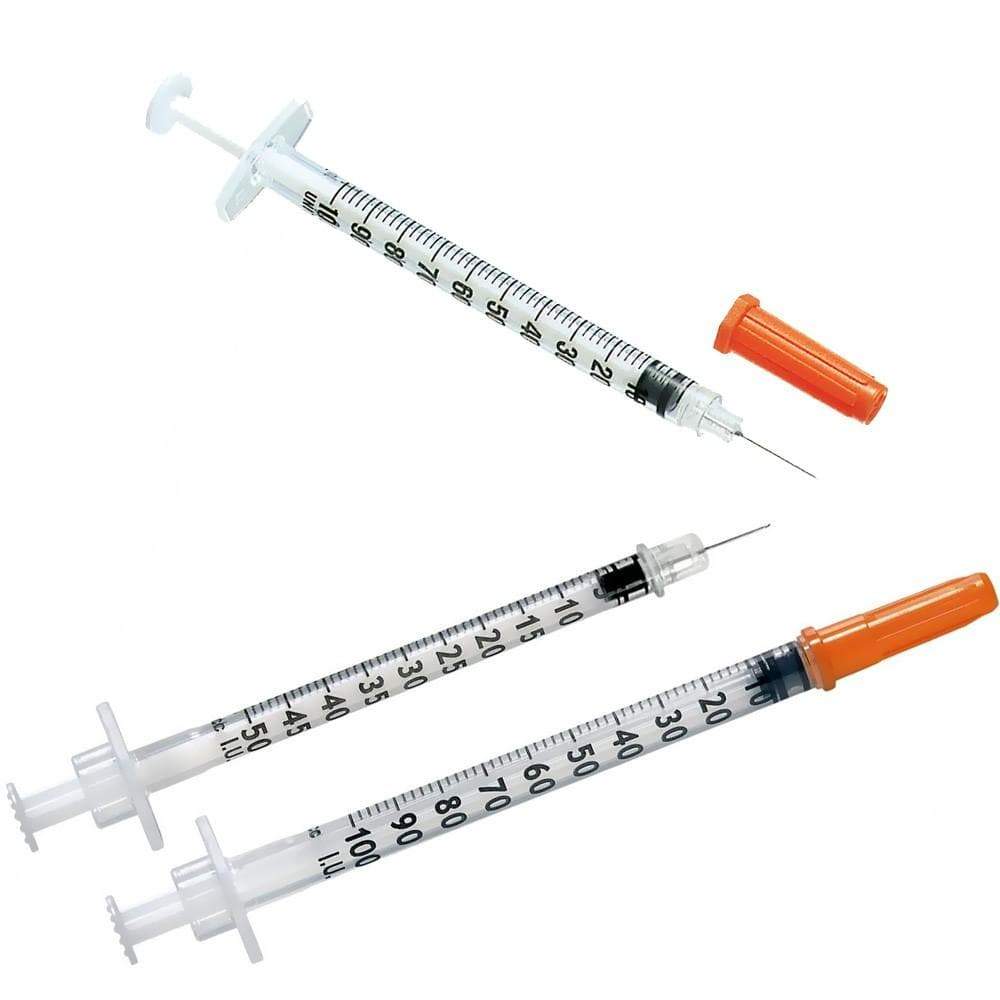
Insulin Needles
10 Pack20 PackLab Supplies
Sterile 31G insulin needles for research use — individually wrapped, single-use. Choose from 10, 20, 50 or 100 pack.
From$8.99AUD
Free shipping over $199
In Stock
✓Free shipping on orders over $199 AUD
✓Australia Post tracked — Standard $8.99 / Express $13.99
✓Same-day dispatch on orders placed before 12PM AEST (next business day after)
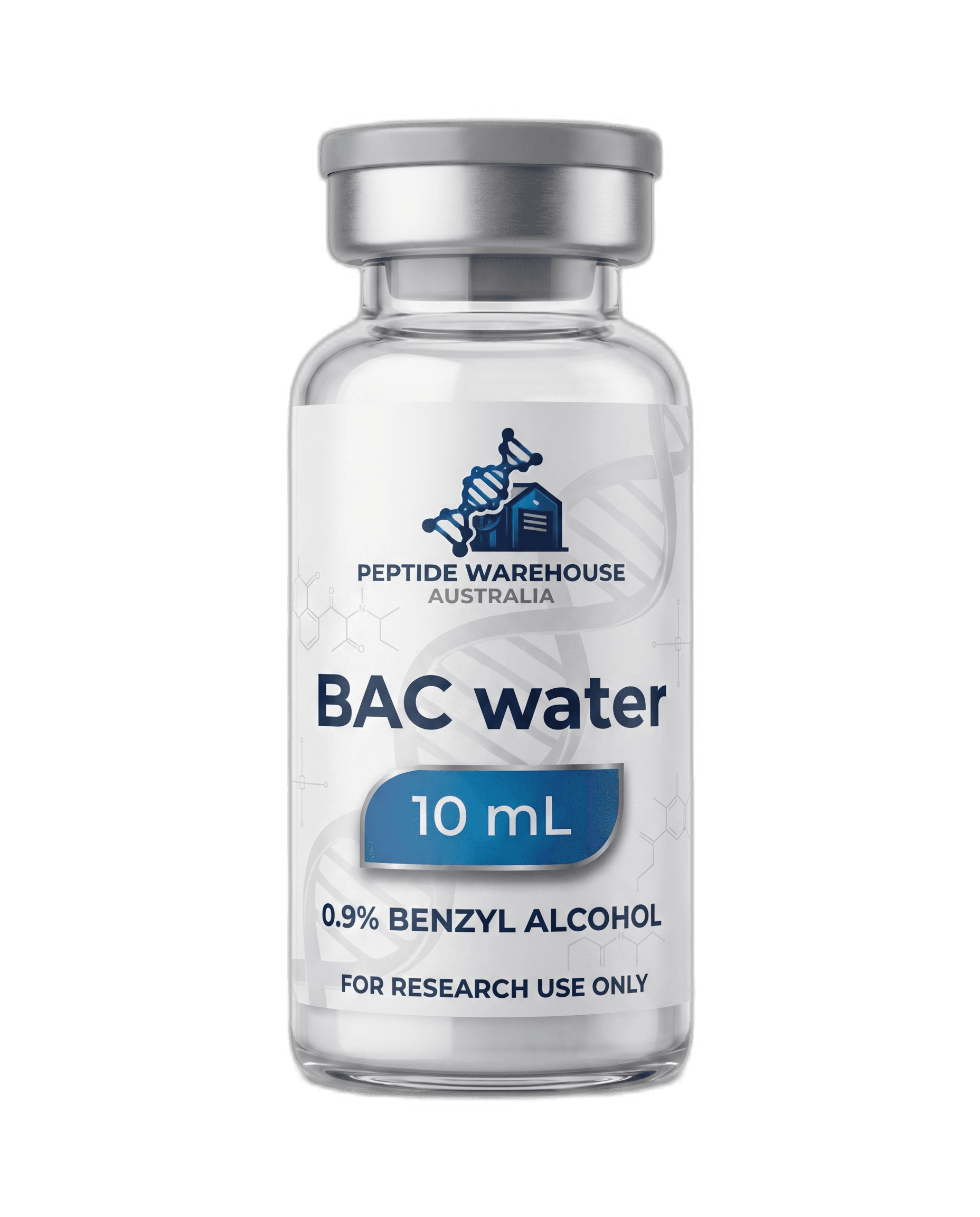
BAC Water is available in Australia from Peptide Warehouse Australia with fast domestic shipping to all states and territories.
Bacteriostatic water is a standard diluent for reconstituting lyophilised research compounds. Unlike plain sterile water, it contains a small amount of benzyl alcohol that prevents bacterial growth — which means you can safely access the same vial multiple times over a 28-day period without worrying about contamination. It is compatible with a broad range of lyophilised research compounds and is the recommended choice for any research protocol where a single vial needs to be accessed more than once.
10mL laboratory-grade glass vial. Fast domestic shipping across Australia from our Melbourne warehouse.
For research use in reconstituting lyophilised research compounds. Not for direct human consumption.
| Compound Class | Preserved diluent (bacteriostatic) |
|---|---|
| Type | Bacteriostatic water |
| Preservative | 0.9% benzyl alcohol |
| Volume | 10 mL |
Bacteriostatic water is a sterile aqueous laboratory diluent containing 0.9% benzyl alcohol as a preservative. It is a standard diluent for reconstituting lyophilised research compounds in laboratory settings. The benzyl alcohol inhibits bacterial growth, making the vial safe for multiple uses without contamination between withdrawals. This is useful in research settings where a single vial may be accessed multiple times over days or weeks. Do not use regular water, distilled water, or saline — these lack the preservative and cannot safely support multi-use access. One 10mL vial is sufficient for reconstituting multiple research vials.
The volume of BAC water determines your working concentration. Common ratios: 1mL BAC water into a 10mg vial = 10mg/mL (10,000 mcg/mL); 2mL into 10mg = 5mg/mL; 5mL into 10mg = 2mg/mL. For a 50mg vial: 5mL BAC water = 10mg/mL. Choose your volume based on the concentration your research protocol requires. One 10mL vial of BAC water can reconstitute multiple research vials.
Unopened BAC water can be stored at room temperature (15–25°C), protected from light. Once opened (first septum access), refrigerate at 2–8°C and use within 28 days — this is the standard multi-dose vial usage period for bacteriostatic preparations. The benzyl alcohol preservative maintains sterility within this window. Do not freeze BAC water. Always use a fresh, sterile syringe each time you access the vial to prevent introducing contamination that could overwhelm the preservative.
Laboratory-grade bacteriostatic water (USP/BP specification) has a pH range of approximately 4.5–7.0, with most preparations falling between 5.0 and 6.0. The slightly acidic pH helps maintain the solubility of benzyl alcohol and is compatible with the pH stability range of most research compounds. If your research protocol requires a specific pH reconstitution buffer (e.g., pH 7.4 PBS), the BAC water can serve as an initial diluent, with subsequent buffering performed during dilution steps. For most lyophilised research compound reconstitutions, the pH of BAC water is appropriate.
BAC water is compatible with the vast majority of lyophilised research compounds. Exceptions to consider: some enzyme assays require benzyl-alcohol-free diluents as benzyl alcohol may inhibit certain enzyme classes at high concentrations — in these cases, use a plain sterile aqueous diluent and fresh-prepare as needed. For routine reconstitution, BAC water is the standard choice.
Benzyl alcohol (C7H8O) is a bacteriostatic agent — it inhibits bacterial growth rather than killing all organisms (which would make it bactericidal). At 0.9% w/v concentration (9mg/mL), benzyl alcohol disrupts bacterial cell membrane integrity sufficiently to prevent proliferation in the aqueous solution. This concentration has been established through decades of laboratory use as effective and stable. It does not precipitate at refrigerator temperatures and remains active throughout the 28-day post-opening period. The 0.9% concentration is sub-cytotoxic for most mammalian cell types at the dilutions typical in laboratory reconstitution work.
Yes — the critical difference is the preservative. A plain sterile aqueous diluent contains only water, sterilised and sealed under aseptic conditions — no benzyl alcohol or other preservatives. Once the vial seal is punctured, it must be used immediately or discarded, as it has no defence against microbial contamination from repeat access. BAC water contains 0.9% benzyl alcohol, which maintains bacteriostasis for 28 days post-opening. For research protocols requiring multiple withdrawals over days or weeks, BAC water is the appropriate choice. A plain sterile diluent is appropriate only for single-use reconstitutions where the entire vial contents are used immediately.
Yes — this is the primary advantage of bacteriostatic water over a plain sterile diluent. The 0.9% benzyl alcohol preservative allows the vial to be accessed multiple times with a sterile syringe over the 28-day post-opening period while maintaining bacteriostatic conditions. Each withdrawal should be made with a fresh, sterile syringe — never reuse one that has been used elsewhere, as this is the primary route by which contamination would be introduced. The vial septum is designed to reseal after each access.
Unopened BAC water vials have a typical shelf life of 2–3 years from manufacture date when stored at room temperature (15–25°C), protected from direct light. The expiry date is printed on each vial. Our stock is managed on a first-in, first-out basis to ensure adequate remaining shelf life on all dispatched vials. Once opened, the effective use period is 28 days (refrigerated). If you are ordering for future research protocols, the sealed shelf life provides ample time for advance purchasing.
A single 10mL BAC water vial is sufficient for reconstituting multiple research vials. Typical usage: 1–2mL per 10mg vial; 2–5mL per 50mg vial. For a research programme involving several standard 10mg vials, one BAC water vial is sufficient. Only purchase additional BAC water if your protocol requires unusually high dilution volumes or if you are running multiple 50mg vial preparations simultaneously.
Our BAC Water 10mL is sourced from laboratory-grade manufacturing facilities producing to USP (United States Pharmacopeia) and/or BP (British Pharmacopoeia) specifications for bacteriostatic water. Quality testing includes: sterility testing (no microbial growth), pH verification (4.5–7.0 range), benzyl alcohol concentration verification (0.9% w/v), endotoxin testing (LAL), and particulate matter assessment. The vials are sealed under aseptic conditions in a clean-room environment. Full documentation is available on request.
Using tap water, distilled water, or non-sterile water for reconstitution introduces several problems: microbial contamination risk — non-sterile water contains bacteria that will proliferate in the solution within hours; dissolved minerals and impurities in tap water can react with research compounds, causing aggregation or degradation; no bacteriostatic preservation means the reconstituted solution cannot be safely stored and re-accessed over days or weeks; and contaminated solutions are unsuitable for any legitimate research use. Always use laboratory-grade BAC water (for multi-use protocols) or a plain sterile aqueous diluent (for single-use only). Our BAC Water 10mL is specifically supplied for this purpose.
Bacteriostatic water is commonly abbreviated to BAC water or simply BAC, and is sometimes called bacteriostatic water for injection. It is the 0.9% benzyl-alcohol solution used to reconstitute lyophilised peptides. For research use only.
How to Reconstitute Peptides: A Step-by-Step Guide
Learn the correct technique for reconstituting lyophilised research peptides using bacteriostatic water for accurate, contamination-free preparations.
Step-by-step guide →Peptide Storage Guide: How to Maximise Stability
Proper storage is critical to maintaining peptide integrity. Learn the correct temperature requirements and handling practices for lyophilised and reconstituted peptides.
Read full article →How to Use a Peptide Calculator
A step-by-step guide to calculating peptide concentrations, reconstitution volumes, and working dilutions for research protocols — with worked examples for common research peptides.
Step-by-step guide →Part of our
Lab Supplies research collection →Or use our Peptide Calculator to work out reconstitution and syringe units for this compound.
Pricing, stock, and COA last verified July 2026
Your cart is empty
Add some research peptides to get started.