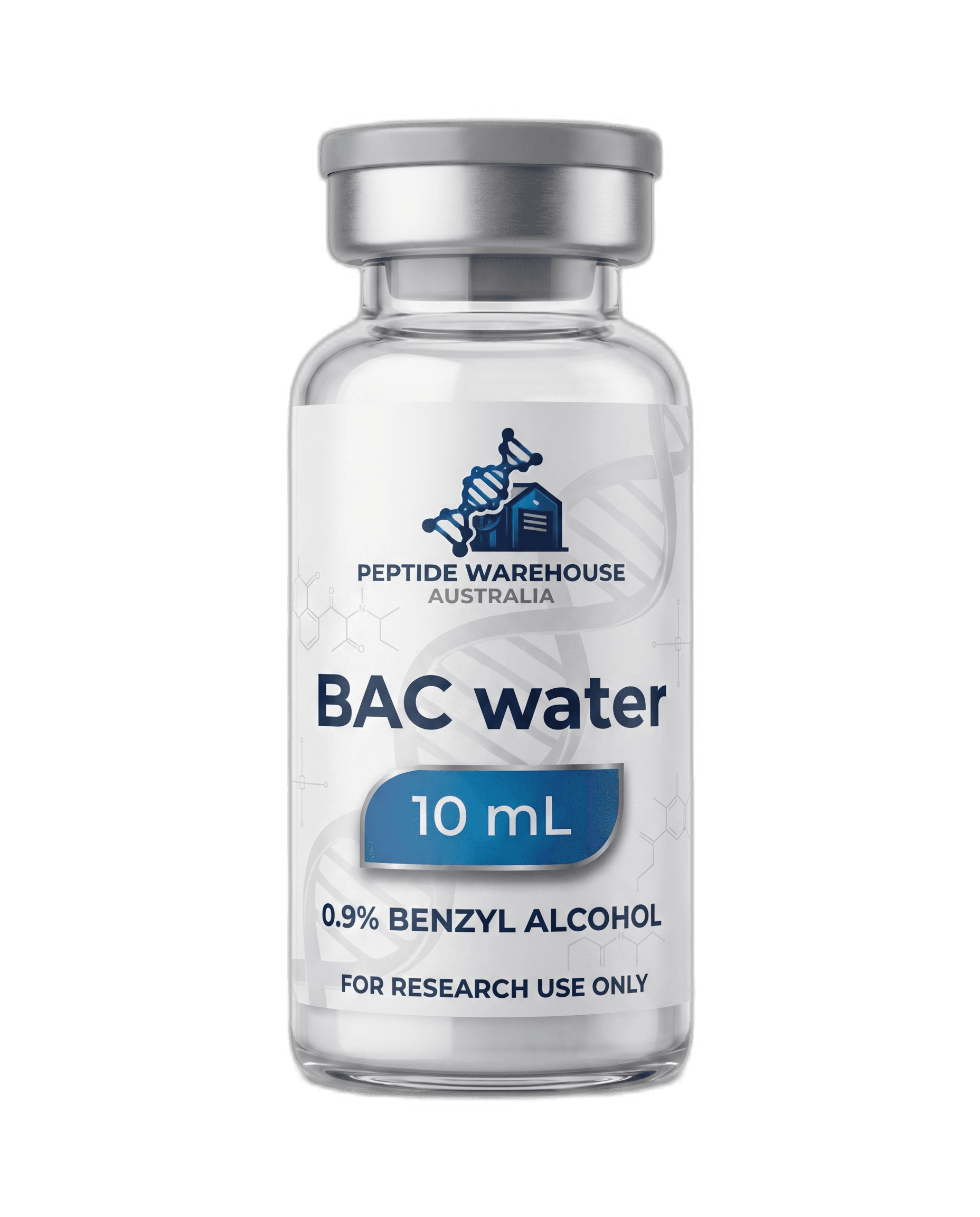
BAC Water
10mLLab Supplies
Pharmaceutical-grade bacteriostatic water 10mL for peptide reconstitution. Contains 0.9% benzyl alcohol preservative. Essential for lyophilised peptide research protocols.
$17.99AUD
Free shipping over $199
In Stock
✓Free shipping on orders over $199 AUD
✓Australia Post tracked — Standard $8.99 / Express $13.99
✓Same-day dispatch on orders placed before 12PM AEST (next business day after)
These laboratory syringes are available in Australia from Peptide Warehouse Australia with fast domestic shipping to all states and territories.
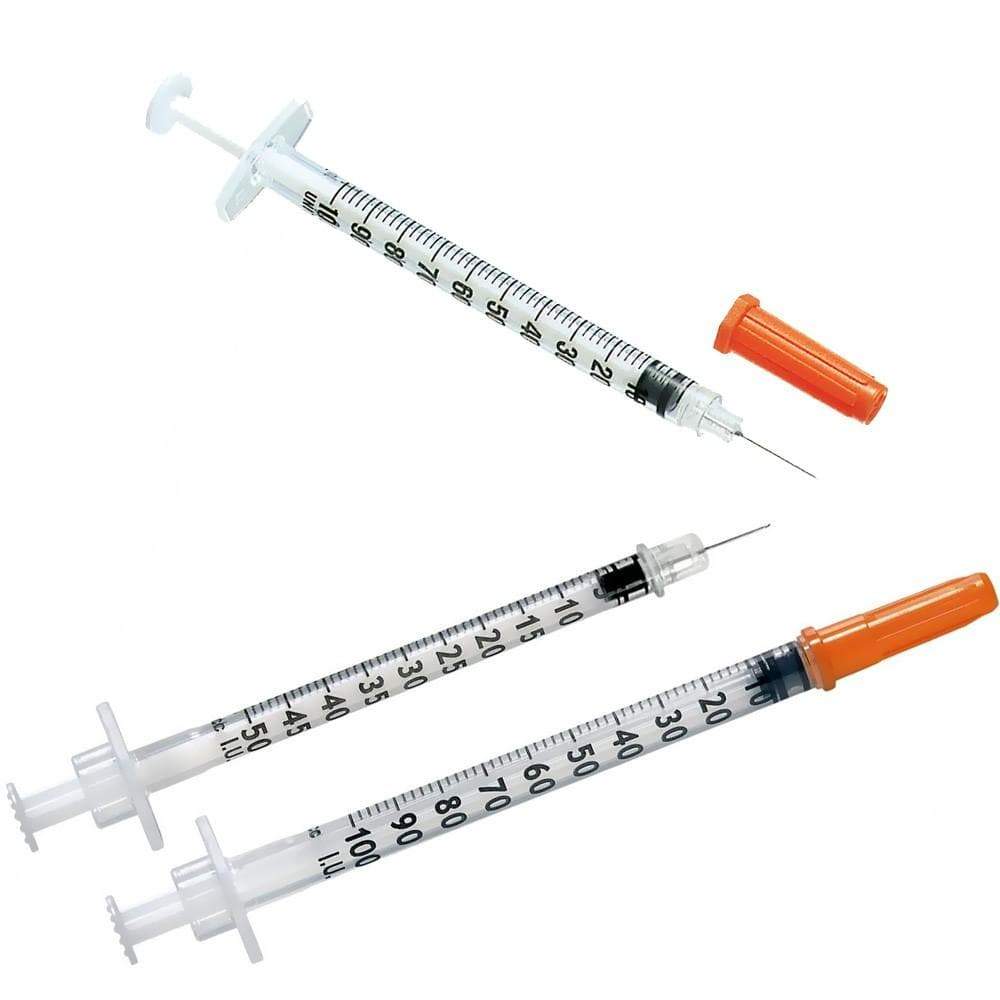
These are the standard syringes used for reconstituting lyophilised research peptides in the laboratory. The 31-gauge size is preferred for vial-based reconstitution work — fine enough to minimise the holes made in vial septa during repeated access, while still allowing smooth and precise liquid drawing. Each syringe is individually wrapped, sterile, and intended for single use only. Available in 10 and 20-pack sizes.
Fast domestic shipping across Australia from our Melbourne warehouse. Available in 10 and 20-pack sizes.
For laboratory vial reconstitution and sample transfer only. Not for injection into humans or animals. Single-use only. Dispose of used syringes in an approved sharps container.
| Gauge | 31G |
|---|---|
| Type | Sterile, single-use |
31G is the standard gauge for peptide research. The higher the gauge number, the finer the needle — 31G is fine enough to minimise resistance while still drawing reconstituted peptide solutions easily. Our needles are individually wrapped, sterile, and single-use with safety caps.
If you're just starting out, a 10-pack ($8.99) is enough to get going. For ongoing research protocols with multiple peptides, a 20-pack ($16.99) provides better value. Use one needle per access of a vial — one to draw BAC water, one per peptide vial withdrawal.
You need three things: (1) Your peptide vial — lyophilised and sealed. (2) BAC Water 10mL — to reconstitute the peptide. (3) Insulin Needles 31G — for withdrawals. All three are available individually or together in our Retatrutide Research Bundle at /products/retatrutide-bundle. Contact us at info@auspeptidewarehouse.com.au if you have questions about what to order.
Our 31G insulin needles are 0.5 inch (12.7mm) in length with a syringe barrel capacity of 1mL (100 units insulin-scale). The 31G gauge refers to the outer needle diameter of approximately 0.33mm. This needle length is standard for the vial-piercing and liquid-drawing procedures used in peptide reconstitution protocols. The 1mL barrel allows precise measurement of BAC water volumes between 0.1mL and 1.0mL for reconstitution and working dilutions.
31G represents a balance between two competing requirements in peptide research: bore diameter large enough to draw viscous or concentrated peptide solutions without excessive aspiration force, and fine enough to minimise dead volume loss in the hub and needle. Finer gauges (30G, 31G) minimise dead volume further but can be slow for drawing from multi-dose vials. Coarser gauges (25G, 27G) draw faster but create larger puncture holes in vial septa, accelerating septum degradation with repeated use. 31G is the established standard in peptide research laboratory protocols for these reasons.
A standard reconstitution requires a minimum of 2 needles per peptide vial: one sterile needle to draw BAC water from the BAC Water vial (/products/bac-water-10ml), and one sterile needle to inject the drawn BAC water into the peptide vial. Some researchers use a single needle for both steps in immediate sequence — draw BAC water, inject immediately into peptide vial — to conserve needles. For ongoing withdrawals from an already-reconstituted peptide vial, use one fresh needle per withdrawal session. For a full research protocol involving 2 peptide vials with 5 total withdrawals each, budget approximately 12–14 needles.
Yes. Our 31G needles are compatible with standard pharmaceutical-grade rubber septa used on lyophilised peptide vials and BAC water multi-dose vials. The needle tip is bevelled and polished to pierce the septum cleanly without coring (cutting out a plug of rubber). The septum on both peptide vials and BAC water vials is designed to self-seal after needle withdrawal, maintaining sterility between accesses. Avoid using needles with damaged or blunted tips — if a needle bends or is difficult to insert, discard and use a new one.
The 0.5 inch (12.7mm) length of our 31G needles is well-suited for drawing from standard 2mL lyophilised peptide vials and 10mL BAC water vials. The needle length allows full access to the vial contents without the needle tip bottoming out, and is short enough to maintain good angle control during injection into the peptide vial. For very small vials (under 1mL), tilting the vial at an angle during the final draw ensures complete aspiration. For larger volume vials (10mL BAC water), the needle length is entirely adequate.
Yes, provided it is done as a single continuous step without the needle touching any non-sterile surface between drawing and injecting. The correct sequence: pierce the BAC water vial septum with a fresh needle → draw the required volume → withdraw from BAC water vial → immediately pierce the peptide vial septum → inject. If you set the filled syringe down or the needle contacts any surface between steps, discard and use a fresh needle. Using two needles (one per vial) is the more conservative and recommended approach for maintaining sterility across a multi-week research protocol.
Used needles (sharps) must be disposed of in an approved sharps container — never in regular waste bins or recycling. In Australia, sharps containers are available from pharmacies and medical suppliers. Most local councils provide sharps disposal programs. Once full, sharps containers should be taken to a participating pharmacy, council facility, or medical waste collection point for safe disposal. Do not recap needles after use — place used needles directly into the sharps container. Needle-stick injuries from improper disposal are a serious hazard. Our needles are single-use only — never sterilise and reuse.
For ongoing research with multiple peptide vials, the 20-pack ($16.99) offers better per-needle value at about $0.85 per needle, compared to $0.90 per needle in the 10-pack ($8.99). If you are uncertain of your usage, start with the 10-pack and upgrade to the 20-pack once your protocol is established. Both pack sizes are shipped in sealed, sterile packaging with no expiry concerns over the typical research timeline. Unused needles in sealed packaging remain sterile indefinitely.
Currently, our standard stock is 31G insulin needles in 10 and 20-pack sizes. 31G covers the full range of peptide research reconstitution and withdrawal requirements for all products in our catalogue. If you have a specific gauge requirement for your research protocol, contact us at info@auspeptidewarehouse.com.au — we may be able to source alternative gauges on request. Our 31G needles are included as standard in the Retatrutide Research Bundle at /products/retatrutide-bundle.
How to Reconstitute Peptides: A Step-by-Step Guide
Learn the correct technique for reconstituting lyophilised research peptides using bacteriostatic water for accurate, contamination-free preparations.
Step-by-step guide →How to Use a Peptide Calculator
A step-by-step guide to calculating peptide concentrations, reconstitution volumes, and working dilutions for research protocols — with worked examples for common research peptides.
Step-by-step guide →Peptide Storage Guide: How to Maximise Stability
Proper storage is critical to maintaining peptide integrity. Learn the correct temperature requirements and handling practices for lyophilised and reconstituted peptides.
Read full article →Part of our
Lab Supplies research collection →Or use our Peptide Calculator to work out reconstitution and syringe units for this compound.
Pricing, stock, and COA last verified July 2026
Your cart is empty
Add some research peptides to get started.