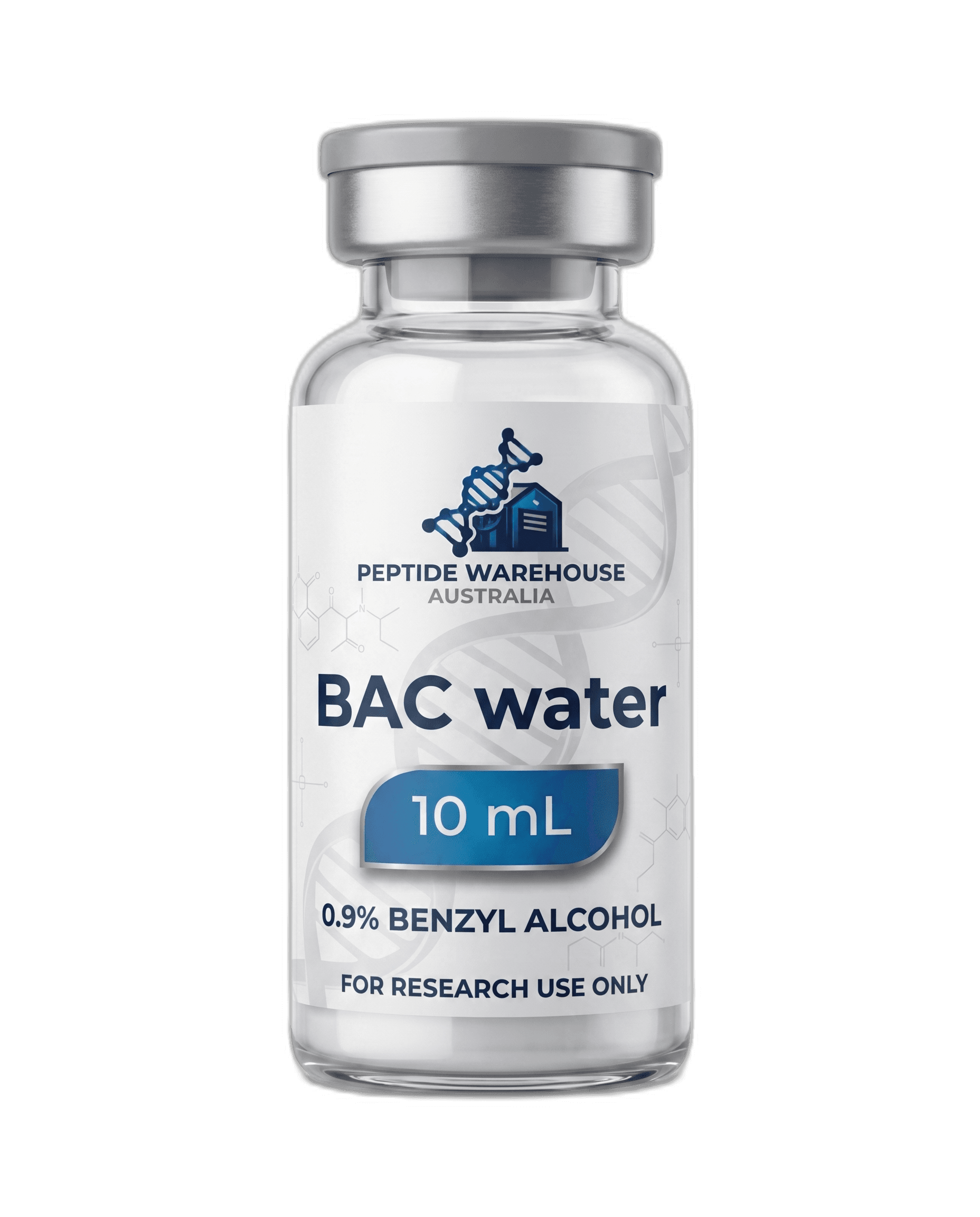
BAC Water
10mLLab Supplies
Pharmaceutical-grade bacteriostatic water 10mL for peptide reconstitution. Contains 0.9% benzyl alcohol preservative. Essential for lyophilised peptide research protocols.
$17.99AUD
Free shipping over $199
Out of Stock
Limited stock — only 1 remaining
Stock is running low. Order now to avoid missing out.
✓Free shipping on orders over $199 AUD
✓Australia Post tracked — Standard $8.99 / Express $13.99
✓Same-day dispatch on orders placed before 12PM AEST (next business day after)
NAD+ is available in Australia from Peptide Warehouse Australia with fast domestic shipping to all states and territories.
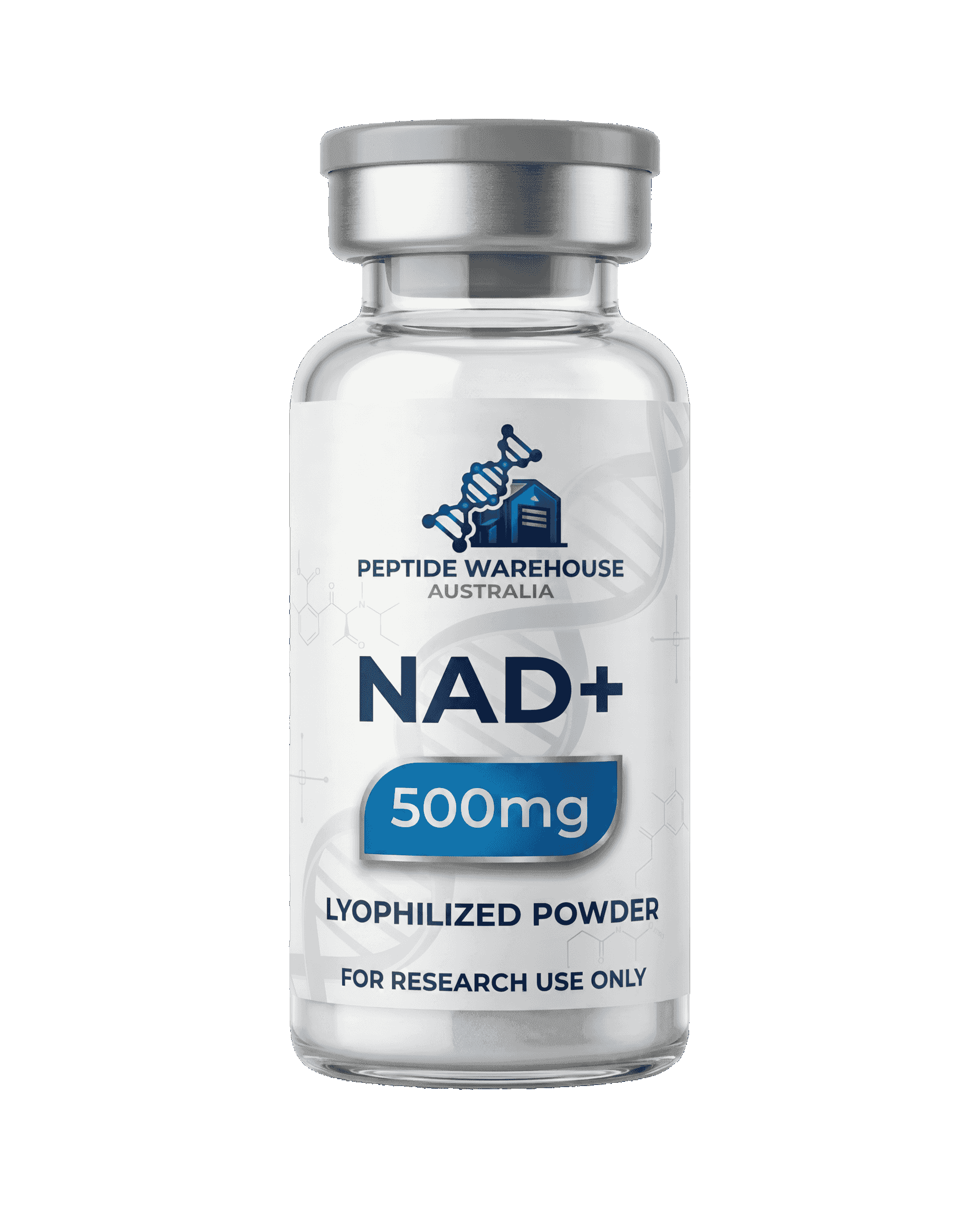
NAD+ (nicotinamide adenine dinucleotide) is one of the most important molecules in every living cell. It plays a central role in how cells produce energy, repair damaged DNA, and regulate biological ageing processes. NAD+ levels decline measurably with age (Rajman et al., Cell Metabolism 2018), and this decline has become a major focus of longevity and metabolic research. Researchers use it to study how cells respond to energy stress, how sirtuin and PARP enzyme systems respond to NAD+ availability, and what happens when cellular NAD+ is restored. The 500mg format is suited to extended cell culture and biochemical research protocols.
⚠ For in-vitro laboratory research use only. Not approved for human or veterinary use. Not drugs, food supplements, or cosmetics. Not evaluated or approved by the TGA. You must be 18 years of age or older to purchase. By placing this order, you confirm you are a qualified researcher and will use this compound strictly in accordance with all applicable Australian laws and regulations.
NAD+ (nicotinamide adenine dinucleotide) is a central coenzyme in cellular redox reactions and a substrate for sirtuin and PARP enzymes. It is studied as a research substrate for mitochondrial energy metabolism, DNA-repair signalling and sirtuin-mediated cellular processes.
| Purity | 99.0% (HPLC) |
|---|---|
| Compound Class | Nucleotide cofactor |
| CAS Number | 53-84-9 |
| Molecular Weight | 663.43 Da |
| Molecular Formula | C₂₁H₂₇N₇O₁₄P₂ |
| Testing | HPLC purity + mass spectrometry identity, COA verified |
| Storage | Lyophilised: −20°C · Reconstituted: 2–8°C, use within 28 days |
| Research Use | In-vitro laboratory research use only |
NAD+ is an essential dinucleotide coenzyme found in all living cells. It functions as an electron carrier in redox reactions and as a substrate for several enzyme families. In research contexts, NAD+ is studied for its roles in oxidative phosphorylation and cellular ATP production, DNA repair via PARP enzyme activation, sirtuin deacetylase activation and epigenetic regulation, circadian rhythm regulation, and longevity and ageing biology. NAD+ levels decline with age and metabolic stress, making it a subject of significant longevity and metabolic research. CAS: 53-84-9; MW: 663.43 Da. Supplied at 99.0% HPLC purity.
NAD+ is the active coenzyme itself. NMN (Nicotinamide Mononucleotide) and NR (Nicotinamide Riboside) are biosynthetic precursors that cells can convert to NAD+ via the salvage pathway. The key research distinction is membrane permeability: NAD+ has poor direct cell membrane penetration and relies on extracellular conversion or specific transporters. NMN and NR can enter cells more readily, making them preferred for systemic in-vivo research. For in-vitro cell-free assays or enzyme activity studies, direct NAD+ is the correct substrate. For whole-cell or tissue research where intracellular NAD+ levels matter, NMN or NR may be more appropriate depending on the model system.
NAD+ requires careful handling due to its hygroscopic (moisture-absorbing) nature. Storage: Lyophilised — store at −20°C in a sealed container with desiccant, protected from light and moisture. NAD+ is more moisture-sensitive than most peptides — exposure to ambient humidity will degrade the powder. Working with the vial: minimise time the vial is open. Reconstituted NAD+ — prepare only what is needed; use promptly (within hours if possible, or within a few days refrigerated at 2–8°C). Unlike peptides, reconstituted NAD+ is less stable over weeks. Avoid freeze-thaw cycling of reconstituted solutions.
Legal status: NAD+ is legal to purchase in Australia for laboratory research purposes. It is an endogenous molecule naturally present in human cells and is not a scheduled substance. Purchasers must confirm research-only use. Quality: Batch PW-260310, independently verified at 99.0% HPLC purity. COA includes: HPLC purity %, mass spectrometry identity confirmation (MW 663.43 Da, CAS 53-84-9), and sterility screening. Full COA available in our COA Library. Sourced from GMP-certified manufacturing facilities with full chain-of-custody documentation.
NAD+ serves as a substrate (not just a cofactor) for several enzyme families of major research interest: Sirtuins (SIRT1–7) — NAD+-dependent protein deacylases involved in epigenetic regulation, metabolic sensing, and longevity biology; PARPs (poly-ADP-ribose polymerases) — consume NAD+ during DNA repair responses; CD38 and CD157 — NAD+ glycohydrolases important in calcium signalling and immune cell biology; and NMNAT enzymes — which synthesise NAD+ from NMN (relevant to NAD+ pathway flux research). Each of these families is a major research area where NAD+ 100mg is the direct substrate required for enzymatic assays. Not for human consumption — for research use only.
NAD+ is highly water-soluble and reconstitutes readily. For most in-vitro research applications, dissolve in sterile distilled water or phosphate-buffered saline (PBS, pH 7.4) to create a concentrated stock solution (e.g., 10–50 mM). For cell-free enzymatic assays, the diluent should be matched to the assay buffer requirements — typically Tris-HCl or phosphate buffer at the appropriate pH. Bacteriostatic water (BAC water, available at /products/bac-water-10ml) may be used for reconstitution if multi-use access is required, though the benzyl alcohol may interfere with some enzyme assays at high concentrations — verify compatibility with your assay system. Prepare fresh solutions where possible due to NAD+ instability in solution. Not for human consumption — for research use only.
Sirtuins (SIRT1–7 in mammals) are NAD+-dependent protein deacylases that require NAD+ as a co-substrate — not merely a cofactor — consuming one molecule of NAD+ per deacylation reaction and producing nicotinamide (a feedback inhibitor) and O-acetyl-ADP-ribose. Because sirtuin activity is directly dependent on NAD+ availability, cellular NAD+ levels act as a metabolic sensor that couples sirtuin-mediated epigenetic regulation to nutritional and energetic status. Key research applications include: SIRT1 and p53 deacetylation in DNA damage response models; SIRT3 and mitochondrial protein deacetylation in metabolic research; and SIRT6 in telomere maintenance and ageing models. Our NAD+ 100mg provides the direct substrate for all sirtuin activity assays. Not for human consumption — for research use only.
NAD+ and NADH are the oxidised and reduced forms of the same dinucleotide. NAD+ accepts electrons (is reduced to NADH) during catabolic reactions including glycolysis and the TCA cycle. NADH donates electrons (is oxidised back to NAD+) to the electron transport chain, driving ATP synthesis. For research purposes: NAD+ is the substrate required for PARP, sirtuin, and CD38 enzyme assays; NADH is used as the substrate or product for dehydrogenase enzyme activity assays and for NADH-coupled spectrophotometric assay systems. They are not interchangeable in assays — use the specific form required by your enzyme system. Our product is NAD+ (oxidised form, CAS 53-84-9). Not for human consumption — for research use only.
NAD+ is chemically labile in aqueous solution due to several degradation mechanisms: hydrolysis of the glycosidic bond between nicotinamide and ribose (particularly under acidic or alkaline conditions); non-enzymatic reduction in the presence of reducing agents or UV light; and spontaneous cyclisation under certain pH conditions. Degradation rates increase at higher temperatures and neutral-to-alkaline pH. Best practice for research: prepare reconstituted solutions fresh on the day of use; if short-term storage is unavoidable, keep at 2–8°C and use within 24–48 hours; use near-neutral pH buffers (pH 6.5–7.0 is more stable than pH 7.5+); and store the lyophilised stock at −20°C until needed. Not for human consumption — for research use only.
Working concentrations of NAD+ in published in-vitro research vary by assay type: Sirtuin deacetylase assays — typically 100 µM to 1 mM NAD+ (near physiological intracellular concentrations of 300–500 µM); PARP activity assays — 100 µM to 500 µM; cell-free NAD+-consuming enzyme kinetics — concentrations spanning Km values, often 10 µM to 2 mM depending on the enzyme; and cell treatment studies (exogenous NAD+ supplementation) — 100 µM to 10 mM in culture medium. The 100mg vial (at MW 663.43 Da) provides approximately 150 µmol of NAD+, sufficient for hundreds of standard assay wells at typical working concentrations. Not for human consumption — for research use only.
The Warburg effect describes the preference of many cancer cells for aerobic glycolysis over oxidative phosphorylation, even in the presence of sufficient oxygen. NAD+ plays a central role in this metabolic phenotype: high glycolytic flux in cancer cells demands rapid regeneration of NAD+ from NADH (to keep glycolysis running), which is accomplished by lactate dehydrogenase converting pyruvate to lactate. This creates a high NAD+/NADH ratio in the cytoplasm. Research using exogenous NAD+ in cancer cell models examines effects on this redox balance, PARP-mediated DNA repair in tumour cells, sirtuin-mediated metabolic reprogramming, and the relationship between mitochondrial NAD+ pools and apoptosis resistance. Not for human consumption — for research use only.
NAD+ is short for nicotinamide adenine dinucleotide. You may also see it written NAD, NAD plus or beta-NAD. For in-vitro research use only.
Researchers typically pair NAD+ with these reconstitution essentials.
Pharmaceutical-grade bacteriostatic water 10mL for peptide reconstitution. Contains 0.9% benzyl alcohol preservative. Essential for lyophilised peptide research protocols.
Free shipping over $199

Sterile 31G insulin needles for research use — individually wrapped, single-use. Choose from 10, 20, 50 or 100 pack.
Free shipping over $199
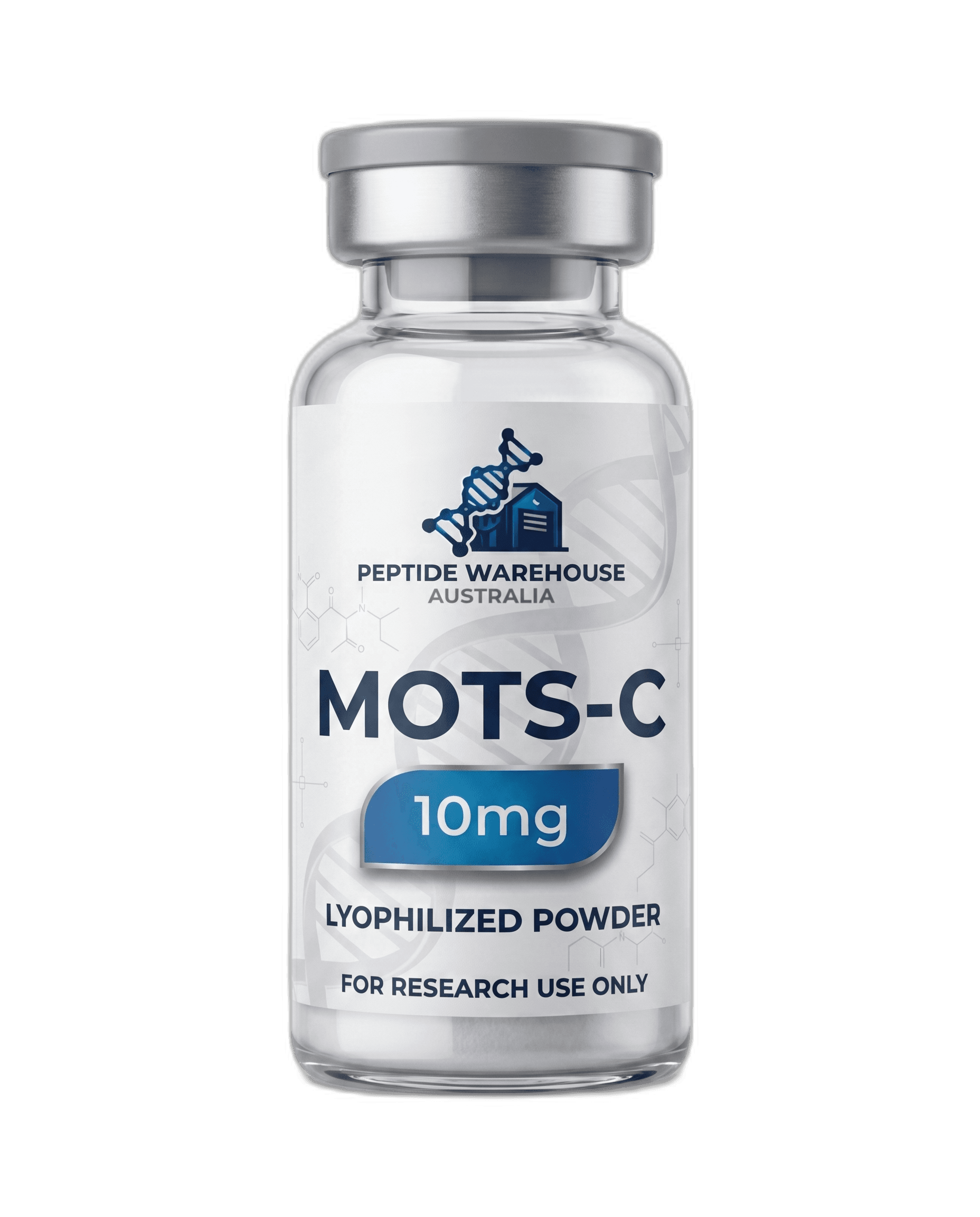
Research-grade MOTS-C 10mg lyophilised powder — 99.0% HPLC purity, COA verified. Mitochondrial-derived longevity peptide studied for metabolic health, insulin sensitivity, exercise capacity, and healthy ageing — AMPK pathway activator.
Free shipping over $199
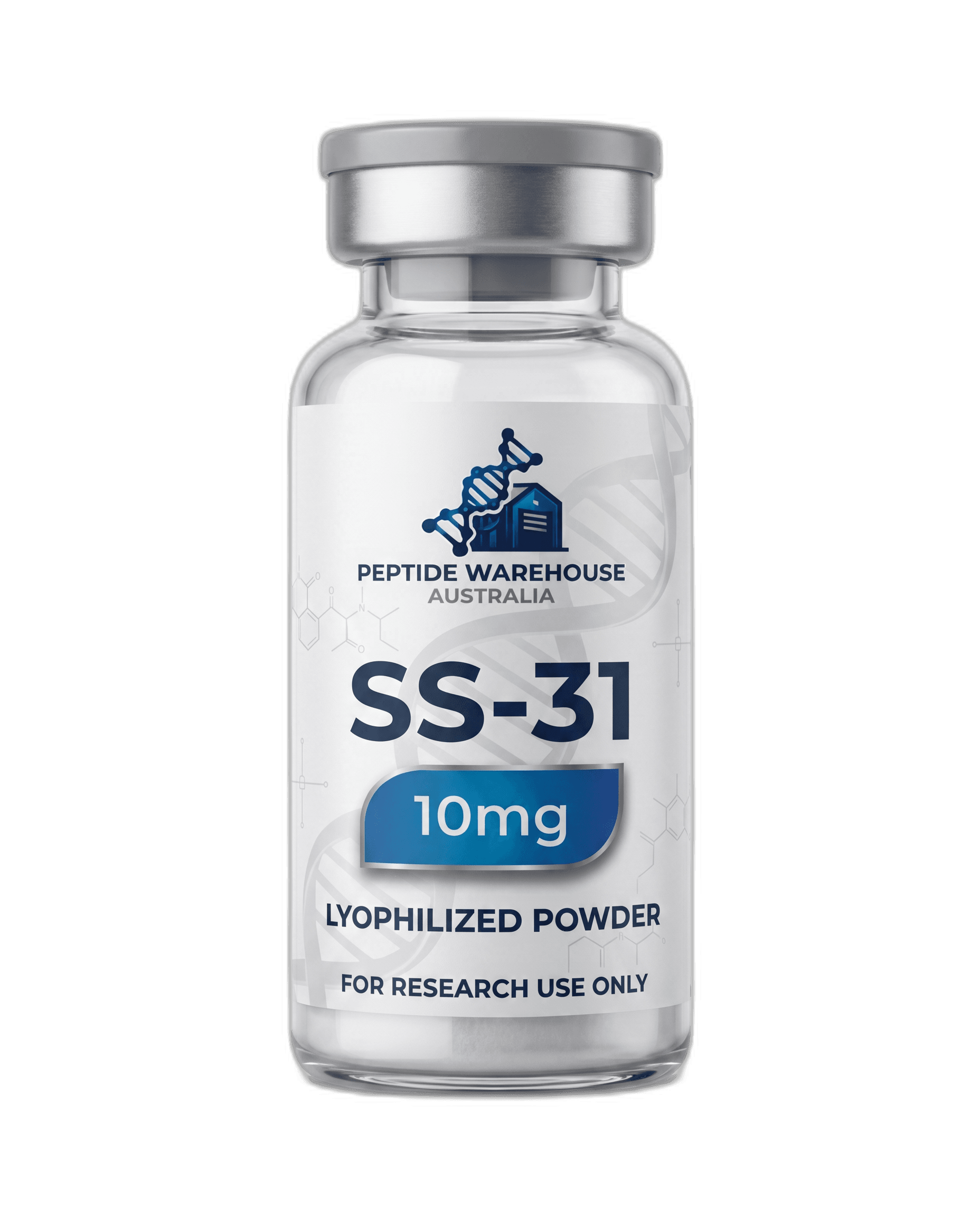
SS-31 (Elamipretide) — mitochondria-targeting tetrapeptide studied in bioenergetics and oxidative-stress research. ≥99% HPLC purity, COA verified.
Free shipping over $199
What Is NAD+? Cellular Energy and Longevity
An in-depth review of NAD+ (nicotinamide adenine dinucleotide) research covering its role in cellular energy metabolism, DNA repair, sirtuin biology, and ageing research.
Research deep-dive →How to Reconstitute Peptides: A Step-by-Step Guide
Learn the correct technique for reconstituting lyophilised research peptides using bacteriostatic water for accurate, contamination-free preparations.
Step-by-step guide →Peptide Storage Guide: How to Maximise Stability
Proper storage is critical to maintaining peptide integrity. Learn the correct temperature requirements and handling practices for lyophilised and reconstituted peptides.
Read full article →Part of our
Mitochondrial Research research collection →Or use our Peptide Calculator to work out reconstitution and syringe units for this compound.
Pricing, stock, and COA last verified June 2026
Your cart is empty
Add some research peptides to get started.