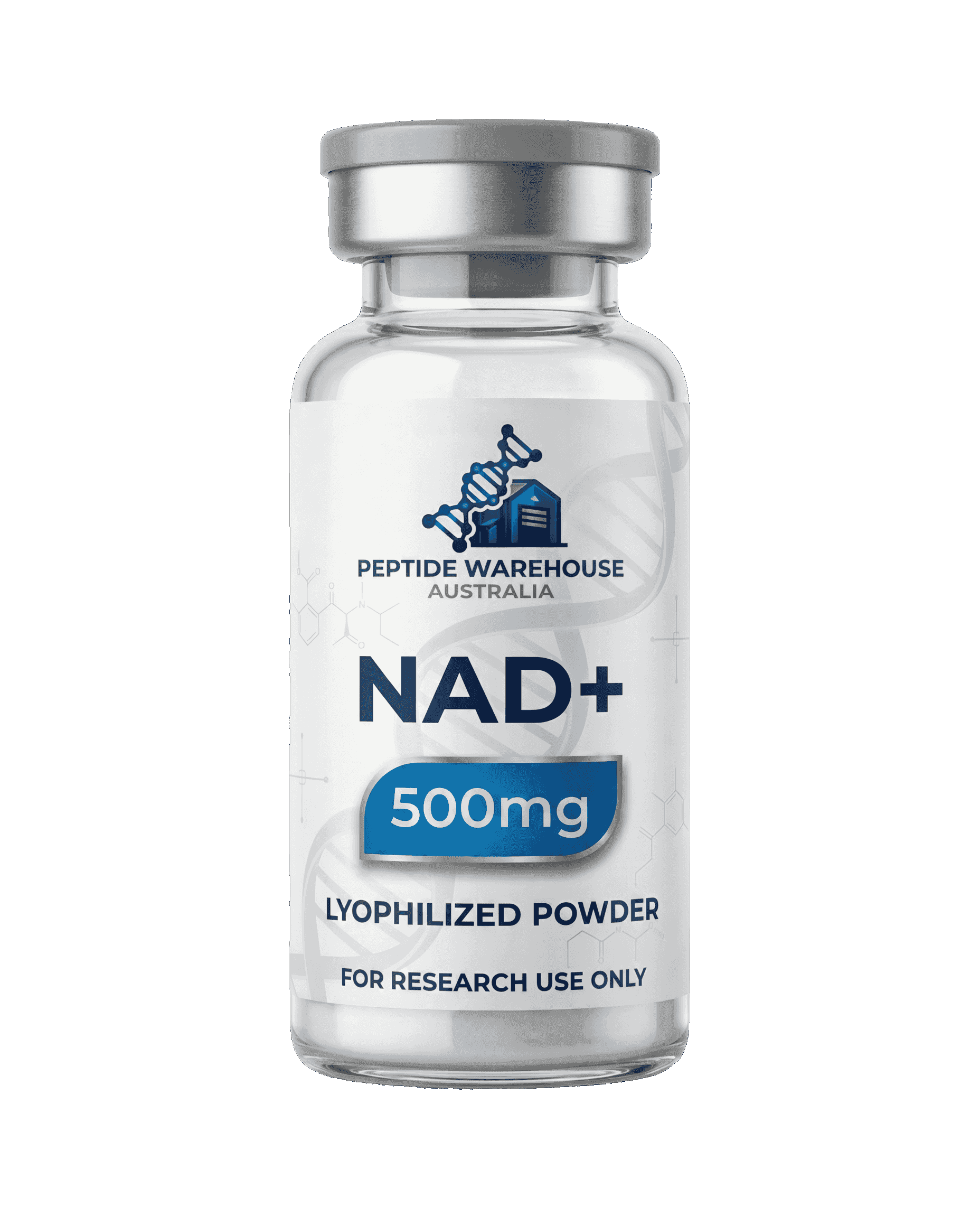
NAD+
500mgMitochondrial Research
Research-grade NAD+ 500mg lyophilised powder. 99.0% HPLC purity, COA verified. Essential coenzyme for cellular energy and longevity research.
$99.99AUD
Free shipping over $199
In Stock
Limited stock — only 9 remaining
Stock is running low. Order now to avoid missing out.
✓Free shipping on orders over $199 AUD
✓Australia Post tracked — Standard $8.99 / Express $13.99
✓Same-day dispatch on orders placed before 12PM AEST (next business day after)
MOTS-C is available in Australia from Peptide Warehouse Australia with fast domestic shipping to all states and territories.
MOTS-C is one of the most exciting peptides in mitochondrial biology research. Unlike most peptides — which are coded by genes in the cell nucleus — MOTS-C is actually produced by the mitochondria, the tiny powerhouses inside every cell. First identified by Lee et al. in Cell Metabolism (2015), it is studied as an internal metabolic signalling molecule. Researchers study it because MOTS-C levels naturally decline with age, and animal model research has investigated its effects on metabolic parameters, insulin signalling, and exercise physiology — including as a proposed mitochondria-derived signal in exercise models.
⚠ For in-vitro laboratory research use only. Not approved for human or veterinary use. Not drugs, food supplements, or cosmetics. Not evaluated or approved by the TGA. You must be 18 years of age or older to purchase. By placing this order, you confirm you are a qualified researcher and will use this compound strictly in accordance with all applicable Australian laws and regulations.
| Purity | 99.715% (HPLC) |
|---|---|
| Format | Lyophilized powder |
| Compound Class | Mitochondrial-derived peptide |
| CAS Number | 1457116-20-9 |
| Molecular Weight | 2174.59 Da |
| Testing | HPLC purity + mass spectrometry identity, COA verified |
| Storage | Lyophilised: −20°C · Reconstituted: 2–8°C, use within 28 days |
| Research Use | In-vitro laboratory research use only |
MOTS-C (CAS 1457116-20-9) is a 16-amino acid peptide encoded within the 12S rRNA region of the mitochondrial genome — not the nuclear genome like most peptide hormones. First identified at the University of Southern California in 2015, MOTS-C has been studied for: improving insulin sensitivity and glucose uptake in high-fat diet rodent models, activating AMPK (the master cellular energy regulator) under metabolic stress, improving exercise tolerance and endurance capacity in preclinical models, examining age-related metabolic changes (plasma MOTS-C levels fall with age), examining adipose-tissue biology in metabolic models, and extending lifespan in C. elegans models. For research use only.
MOTS-C, Epitalon, and NAD+ address ageing through entirely different biological mechanisms. MOTS-C is a mitochondria-derived peptide that activates AMPK via nuclear translocation — directly improving cellular energy metabolism and insulin sensitivity. Epitalon is a tetrapeptide that activates telomerase, with longevity research focused on telomere length and circadian biology. NAD+ is a coenzyme (not a peptide) that supports mitochondrial ATP production and sirtuins as a substrate. Each targets a different aspect of the ageing process and they are not interchangeable research tools. Not for human consumption — for research use only.
AMPK (AMP-activated protein kinase) is the cell's master energy sensor. When cellular energy is low or under metabolic stress, AMPK is activated and triggers increased glucose uptake and fatty acid oxidation, inhibition of energy-consuming processes, improved mitochondrial biogenesis, and downregulation of inflammatory pathways. Under metabolic stress, MOTS-C translocates from the mitochondria to the cell nucleus and activates AMPK directly — an unusual signalling mechanism for a mitochondrial peptide. This nuclear translocation and AMPK activation is the primary proposed mechanism behind MOTS-C's observed effects on insulin sensitivity, fat metabolism, and exercise capacity. Not for human consumption — for research use only.
One of the key findings in MOTS-C research is that physical exercise dynamically increases circulating MOTS-C levels in rodent models. In reciprocal experiments, MOTS-C administration to sedentary animals replicated some metabolic adaptations normally seen with exercise training — including improved glucose tolerance, increased skeletal muscle fatty acid utilisation, and enhanced endurance capacity. This has led researchers to propose MOTS-C as a potential 'exercise mimetic' — a signal the body normally releases in response to exercise-induced mitochondrial stress. Not for human consumption — for research use only.
Reconstitution: Draw 1–2mL of bacteriostatic water into a clean 31G insulin syringe. Inject slowly down the inside wall of the MOTS-C vial. Gently swirl until fully dissolved. The solution should be clear and colourless. Common concentration: 1mL BAC water = 10mg/mL; 2mL = 5mg/mL. Storage: Lyophilised — store at −20°C for up to 24 months. Reconstituted — refrigerate at 2–8°C and use within 28 days. Protect from light.
MOTS-C is legal to purchase in Australia for legitimate laboratory research purposes. It is not listed as a scheduled substance under the Poisons Standard when sold for research use only. Purchasers must be 18+ and confirm research-only use. It is not TGA-approved for human consumption, therapeutic, or veterinary use. Our MOTS-C 10mg is independently verified at 99.0% HPLC purity with full COA documentation. Peptide Warehouse Australia dispatches nationwide from our Melbourne warehouse via Australia Post.
MOTS-c is studied for activating metabolic pathways — notably AMPK — that overlap with those engaged by physical exercise, which is why research literature sometimes refers to it as an exercise-mimetic research tool. This metabolic-adaptation angle is a prominent strand of MOTS-c research. Not for human consumption — for research use only.
In preclinical research, MOTS-c is studied as a mitochondrial-derived peptide that translocates and activates AMPK-related signalling, influencing glucose handling and metabolic homeostasis. AMPK activation is the most-cited mechanistic feature of MOTS-c research. Not for human consumption — for research use only.
MOTS-c has been examined in preclinical metabolic models for effects on insulin sensitivity and glucose uptake, tied to its AMPK-related signalling. These are research-model findings used to study metabolic regulation, not evidence of any human effect. Not for human consumption — for research use only.
MOTS-c is a mitochondrial-derived signalling peptide acting through AMPK and metabolic pathways, whereas SS-31 (/products/ss-31-10mg) is a synthetic tetrapeptide that binds cardiolipin at the inner mitochondrial membrane for structural/bioenergetic research. They are complementary but distinct research tools. Not for human consumption — for research use only.
Research-grade NAD+ 500mg lyophilised powder. 99.0% HPLC purity, COA verified. Essential coenzyme for cellular energy and longevity research.
Free shipping over $199
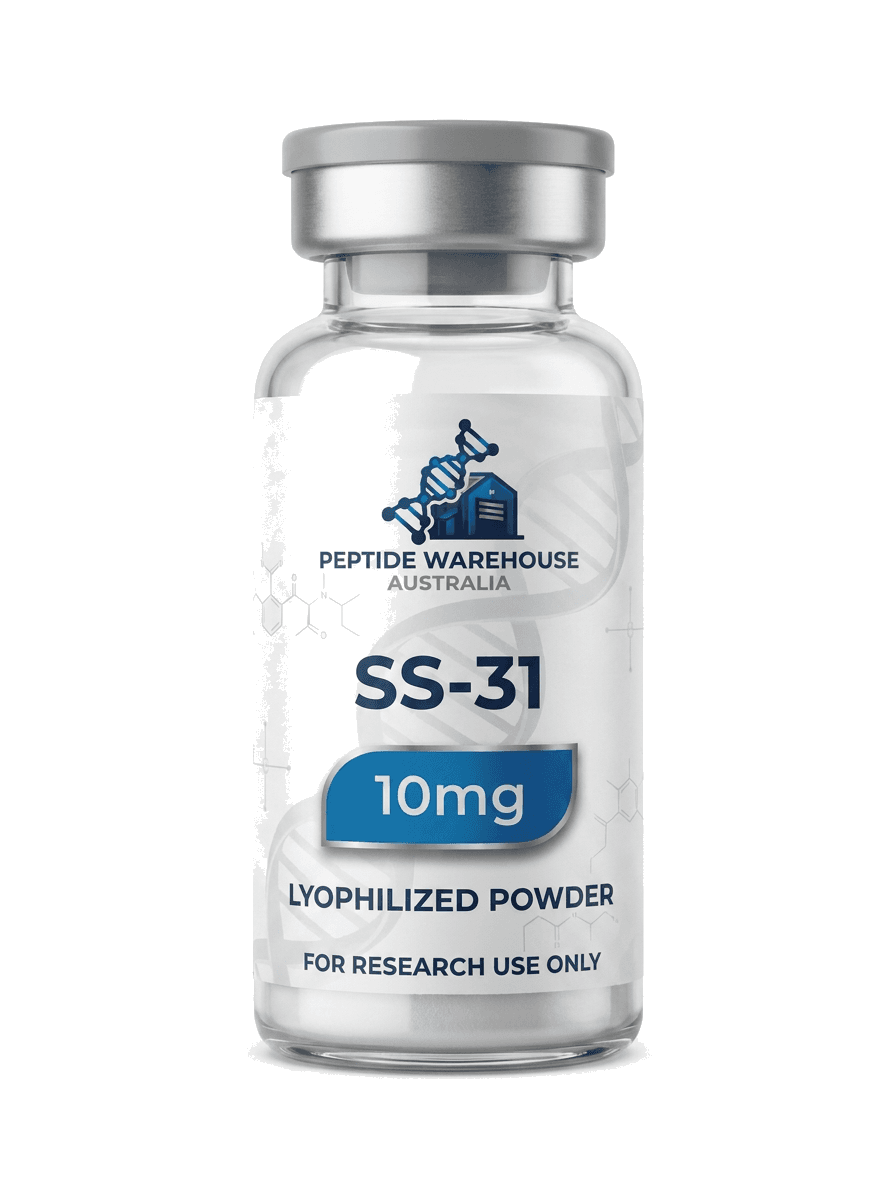
SS-31 (Elamipretide) — mitochondria-targeting tetrapeptide studied in bioenergetics and oxidative-stress research. ≥99% HPLC purity, COA verified.
Free shipping over $199
What Is MOTS-c? Mitochondrial Peptide Research Guide
MOTS-c is a 16-amino-acid peptide encoded by mitochondrial DNA and studied for its roles in metabolic regulation, exercise physiology, and age-related decline. Here is what the science shows.
Research deep-dive →How to Reconstitute Peptides: A Step-by-Step Guide
Learn the correct technique for reconstituting lyophilised research peptides using bacteriostatic water for accurate, contamination-free preparations.
Step-by-step guide →Peptide Storage Guide: How to Maximise Stability
Proper storage is critical to maintaining peptide integrity. Learn the correct temperature requirements and handling practices for lyophilised and reconstituted peptides.
Read full article →Part of our
Mitochondrial Research research collection →Or use our Peptide Calculator to work out reconstitution and syringe units for this compound.
Pricing, stock, and COA last verified June 2026
Your cart is empty
Add some research peptides to get started.